
Why 10 Minutes of Daily Movement Beats Organized Sports for Kids Under 6
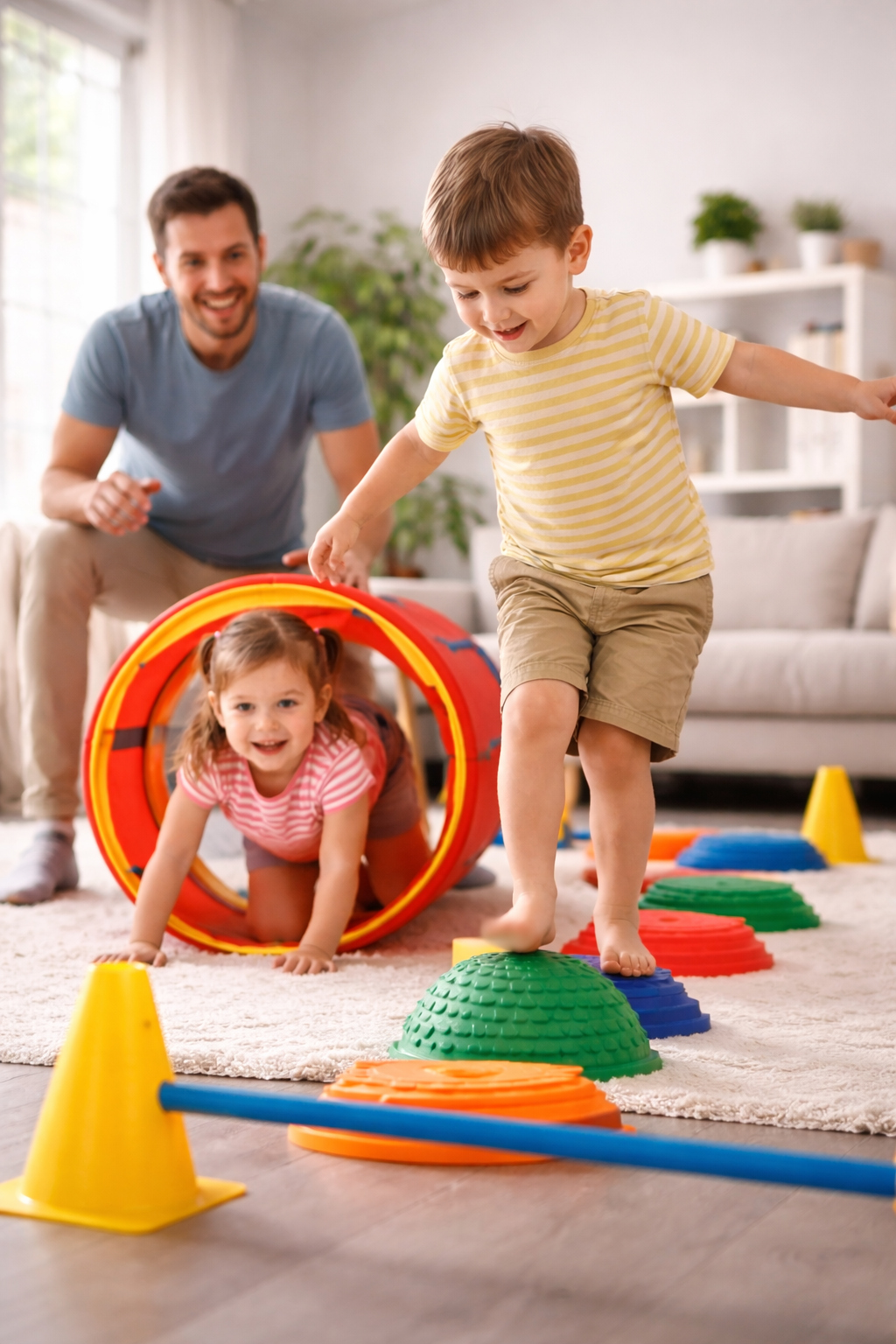
Short, daily movement builds the foundation kids need before organized sports.
Many parents feel like they are behind if their child is not enrolled in something.
Soccer. Gymnastics. T-ball. Dance.
It can feel like organized sports are the only way kids learn coordination, confidence, or discipline.
For children under six, that assumption is usually wrong.
At this age, short, daily movement matters more than structured sports.
What Kids Under 6 Are Still Learning
Before kids can benefit from organized sports, they need a foundation.
That foundation includes:
Basic balance
Body awareness
Comfort with movement
Confidence trying new things
The ability to follow simple directions
Most young children are still developing these skills. Organized sports often assume they already exist.
Daily, informal movement is how those skills are built. (Read this blog for some ideas!)
Why Organized Sports Can Miss the Mark Early
Organized sports are not bad. They are just often introduced too early.
Common challenges for kids under six include:
Long periods of waiting
Complex rules
Loud, busy environments
Performance pressure
Comparison to other kids
For many young children, this leads to frustration rather than confidence.
Movement at home removes those barriers.
The Power of Short, Daily Movement
Ten minutes a day may not sound like much, but it adds up quickly.
Daily movement at home:
Builds coordination gradually
Feels safe and familiar
Allows kids to move at their own pace
Encourages effort without judgment
Consistency matters more than intensity at this age.
A little movement every day beats one structured session each week.
Confidence Comes Before Competition
Kids who enjoy moving are more likely to stick with sports later.
When early experiences feel playful and positive, children:
Take risks more easily
Recover from mistakes faster
Feel capable in their bodies
Enter organized sports with confidence
The goal is not to delay sports forever.
The goal is to prepare kids to enjoy them.
Where Kidletics Club Fits In
Kidletics Club was designed for this in-between stage.
It supports families who want to:
Build movement into daily life
Avoid over-scheduling
Reduce pressure and comparison
Create positive early experiences with sports
Each box provides simple activities that work at home and help children develop the skills they need before organized sports begin.
The Takeaway
Organized sports will still be there later.
Right now, what matters most is helping your child feel comfortable, confident, and capable in their own body.
Ten minutes of movement today can do more than an hour of structure later.